🏍️ Honda CB400N -83 rebuild
One Honda CB400N 1983 was found in a garage just outside Lerum in the autumn of 2016. It was running, but dirty and in terrible condition, yet after a test ride I decided to buy it.
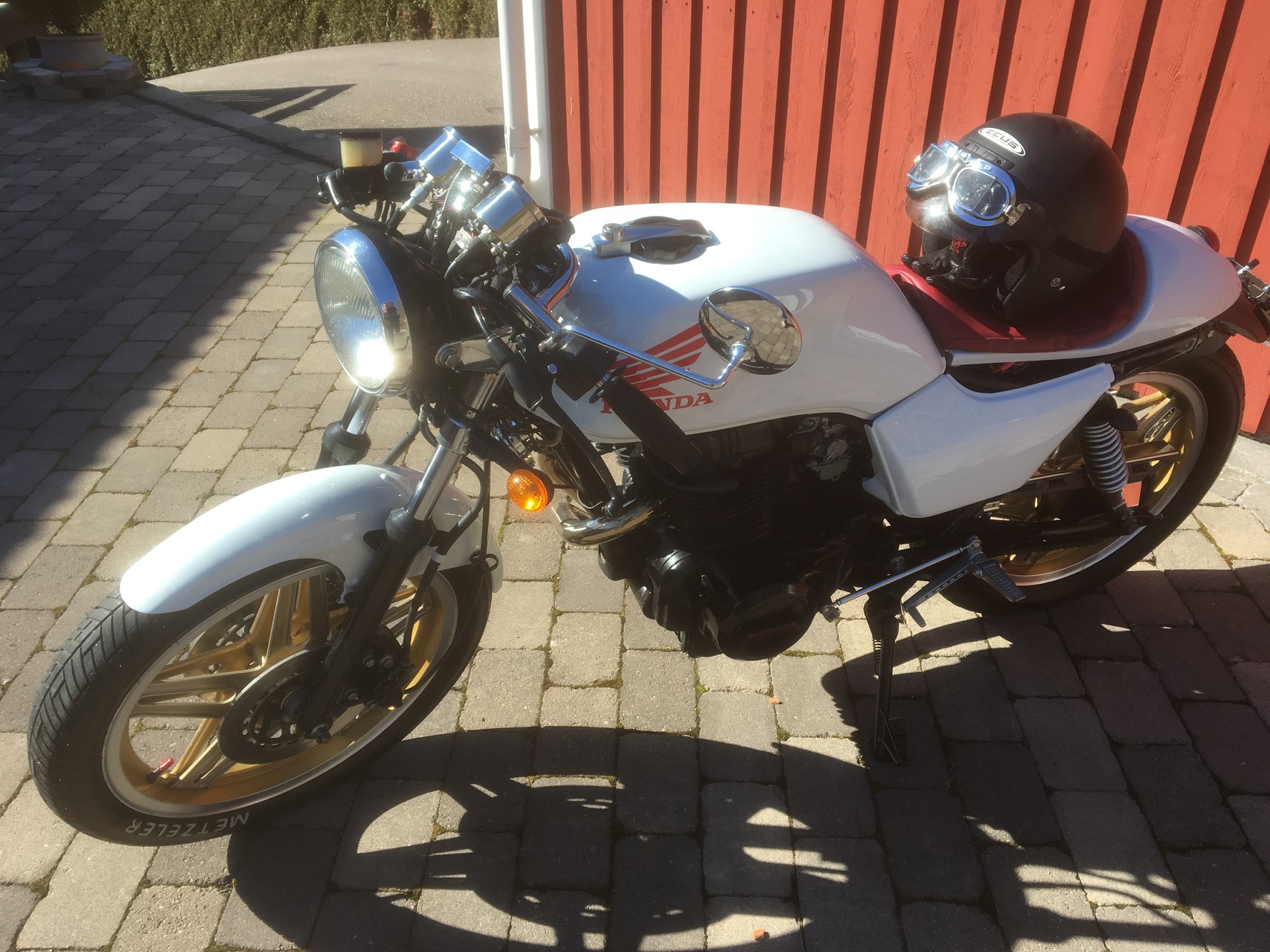
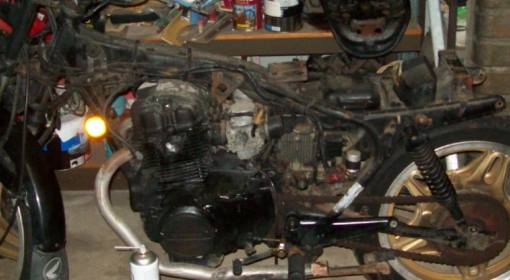
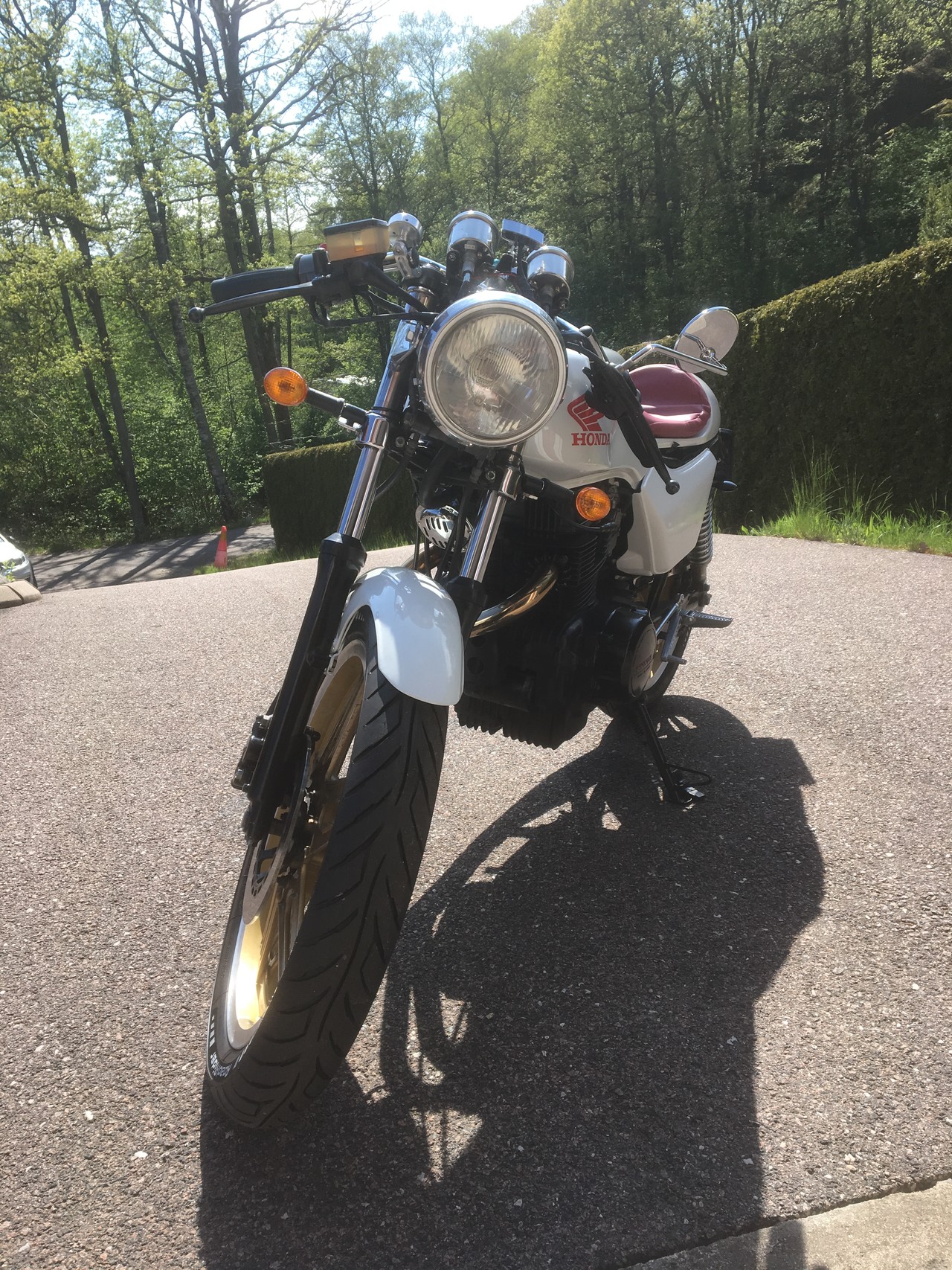
The whole bike was taken apart and cleaned. Rust was removed, and a frame repaint was necessary. The engine was also taken apart and cleaned, the valves were adjusted, the clutch replaced, and both sprockets and the chain renewed. The fork was reconditioned, and the brakes rebuilt with new pads and fresh fluid. It received new tires and a freshly painted frame. The electrical system needed a complete overhaul. The seat was a terrible homemade steel construction that had to be replaced. The rear fender was missing and was replaced with a front fender from a Harley-Davidson.
The basic engine formula, a very over-square twin-cylinder motor relying on chain-driven counterweights to balance out most of the vibration inherent in a four-stroke twin. Honda's three-valve-per-cylinder layout, as on the Civic car engine, and the engine breathes through two 32mm Keihin constant vacuum carburettors to give a claimed 43bhp at 9,500rpm and 24.5ft-lb of torque 1,500rpm lower down the scale. Straight-cut gears transmit the power through a 14-plate clutch running in engine oil.
From side to side through a series of bends is no problem thanks to the low weight and agility. One of life’s pleasures is picking the Honda up from a left-hand bend, leaning into a right-hander, and shifting smoothly through the gearbox. The engine is strong enough to pull a high gear through most bends, but the top three ratios in the six-speed gearbox are close enough to make their efficient use very satisfying.The gearbox itself is smooth and the ratios fast and easy to select, with no risk of missing a change, but because of the relatively modest power output of the engine you need to avail yourself of the 'box' to get the best out of the machine.
Braking is superb at the front but pretty poor at the rear. The twin front discs are powerful — one finger is enough for hard stops — but the rear drum offers almost no feel. Considerable pressure is needed to achieve any braking from the rear, and it can lock unexpectedly. Wet braking caused no problems. A rear drum was acceptable in 1982, but today it feels outdated.
Driving in town traffic the Honda has a light and quick steering, a feather-like clutch action, great braking, and a docile disposition. Yet it has all the urge it needs to stay ahead of most traffic, excluding riders of larger motorcycles. Neutral is easy to find at a standstill, although six gears can feel like overkill when you have to shift down five times approaching a red light. My ankle is not entirely convinced that so much frantic activity should be necessary.
The major electrical components and the battery live behind the sidepanels. The air filter is a washable polyurethane foam type, which cut servicing costs. Being a single overhead cam engine, tappet adjustment presents few problems — the whole rocker box comes off with just two bolts. The electronic ignition removes yet another chore. Regular service mainly involves changing the oil and balancing the carbs, and the oil drain plug is easy to reach.
Mechanical noise on the twin is very low, and generally it has all the appearances of being very easy to live with. One annoying trait that seems characteristic of the models from this time is a high degree of drive-train lash which is compounded by the sudden on/off action of the CV carbs.
This is a great little bike — very fun to ride on the roads near my home in Kungsbacka.
Before restoration, 2016 |
After rebuild, 2017 |
|
|
Some of the customization:
A lot of pictures were taken during the build, and you can view them all in the album.
The specification:
|
Make Model |
Honda CB 400N Super Dream |
|
Year |
1982 - 83 |
|
Engine |
Four stroke, parallel twin cylinder, SOHC, 3 valves per cylinder, 360 crankshaft and twin balance-shafts |
|
Capacity |
395 cc / 24.1 cu-in |
| Bore x Stroke | 70.5 x 50.6 mm |
| Cooling System | Air cooled |
| Compression Ratio | 9.3:1 |
|
Induction |
32mm Keihin carburetors |
|
Ignition |
CDI |
| Starting | Electric only |
|
Max Power |
43 hp / 31.4 kW @ 9500 rpm |
|
Transmission |
Six-speed, selected by one down, five up left-side foot lever. Overall ratios of 19.2, 13.7, 10.9, 9.0, 7.6 and top 6.5:1 |
| Final Drive | Chain |
|
Front Suspension |
Telescopic forks |
|
Rear Suspension |
Dual EVO dampers with 5-way spring preload adjustment. |
|
Front Brakes |
2x 239mm disc |
|
Rear Brakes |
152mm Drum |
|
Front Tyre |
3.60-19 |
|
Rear Tyre |
4.10-18 |
| Wheelbase | 1390 m / 54.7 in |
| Seat Height | 795 mm / 31.2 in |
|
Wet-Weight |
175.5 kg / 387 lbs |
|
Fuel Capacity |
14 Litres / 3.7 US gal |
|
Consumption Average |
4.523 L/100km (52 mpg) |
|
Braking 60 - 0 / 100 - 0 |
- / 38.1 m |
|
Standing Mile |
14.6 sec |
|
Top Speed |
166.4 km/h / 103.4 mph (this is theoretical, it will never happen, 140 km/h is more realistic) |